Ego, the enemy of the first draft

I’ve said it before. The worst thing any creative writer could carry through his or her process is ego. Ego is the most formidable enemy when it comes to editing a first draft.

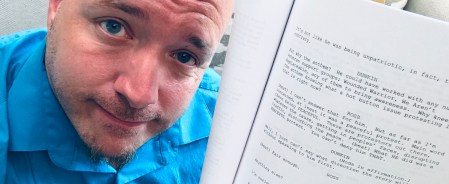
A lot of times, emerging writers need help even after they complete a first draft. When I first started out writing screenplays, my biggest adversity was editing the manuscript once I wrote the phrase Fade Out on the final page. Looking back, the main reason for this was I was using a typewriter, not word processing software on a laptop, and a lot of times I was just lazy to go back and retype so much to much edits.

However, having made the change to a laptop, editing has since become the favorite and most exciting part of my own creative process. If you feel lost after you have completed the first draft of your writing project, I would love to help you with the next step. Please feel free to Work with Me, and let’s get that first draft into a final draft so it’s ready for the world to see.

For now, here are some of the things I do when I’m editing my first draft of any script and keep the project moving forward to achieve its best version.

The biggest sword you can wield against your own ego to edit material of which you have become emotionally attached is objectivity.

Objectivity is the hardest thing for a writer working on a new project to maintain. When I’m working on a new script, obviously I’m going to be in love with it. If I wasn’t in love with it, I wouldn’t keep working on it. After my first draft is complete, that’s when the objectivity has to kick in.

Some writers that I’ve worked with have been so in love with their first drafts, they throw it out to producers trying to hook them for a production without ever really stepping back and seeing what they’ve truly put together. And then there are some writers who will actually take the disinterest in their work personally, maybe even forcing them to quit altogether.

Objectivity can save a writer from all of that. So this is what I do to make sure I give myself a chance to give the work it’s best chance. It’s actually a fairly simple process.

1) Finish the first draft. Print the manuscript out. Bind it. Write “First Draft” on the cover.

2) (and this is the most important step) LET IT SIT! Let the manuscript sit in a drawer, on a shelf, on the counter next to the coffee maker; doesn’t matter where. Just let it sit. And let it sit for TWO WEEKS AT LEAST. Why? That is the key to objectivity. Forget about what’s in that script. Start developing a new one. If you can start writing vivid scenes of a new project, start to find yourself falling in love with THAT one. Once you’ve gained distance from your first draft, then come back it like an editor not as a writer.

So give your first draft enough time for you to fall out of love with it. Then go back to it. Find a place where you can sit down undisturbed for a while, bring a pen and read your script from start to finish; maybe not in one sitting.

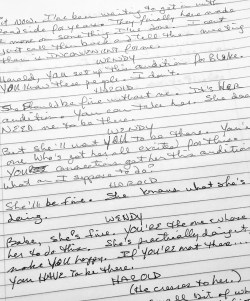
From there, mark the living crap out of it. Scrutinize like an accountant looking for missing money. Every description, line of dialogue, stage direction. Look for everything and anything that could be deemed confusing; voice, consistent character responses, word choice, congruence, angles, everything. For me it’s tenses. I always find mistakes where my stage directions switch from present to past tense and back.

Mark it up and be proud of it. Ask yourself with every scene, “What purpose is this serving the story or character(s) as a whole.” If you can’t find a reason, cut the whole scene and don’t look back. Put one big line through those pages and move on.

Recently, I listened to an episode of The Playwrighting Podcast by Ken Wolf, artistic director of Manhattan Repertory Theatre in NYC. If you haven’t subscribed to this podcast yet, it is well worth your time to do so. Wolf teaches much of the same writing process I’ve used for years and his philosophy is spot on.

In a recently episode of the podcast (Ep. 120-Words, Words, Words!), Wolf said something very interesting when it comes to editing dialogue after the first draft is complete. He suggests dialogue should be driving the story forward with no more than two lines each character, unless the character is expressing something emotional. If the dialogue is driving plot, it should only take one or two lines.

Wolf also said the editing process should be done in at least five rounds to ensure the material is congruent. He admitted five rounds of editing sounds crazy, but he swears combing through dialogue this many times will help ensure the script isn’t too wordy in its final draft.

Imagine that; editing your manuscript five times over before you could call it finished. This is I feel why playwrighting is a labor of love. However, I know some emerging writers have issues with this part of the process. Some feel it is mundane and as exciting as a root canal.

This is why I am here as Benn Farrell Freelance to help those writers who need an objective eye on his or her manuscript. Let me help you take what will be the final draft to the next level and save you the aggravation of the editing process. It excites me, and I’m excited to help you.
Trouble getting started? Begin by writing what is most vivid (UPDATED)

By Benn Farrell – UPDATED: June 8, 2019

You can’t teach an old dog new tricks. That’s a cliche I used to heartily believe, but when it comes to my development of a new stageplay, I find the cliche changes to “You can teach a old dog to do old tricks in a new way.”

When I began developing my latest stageplay, still only in its first draft, I fell back on a technique I developed in college. It still famously works for me, and because of it, I was able to pump out the first draft of Hook and Ladder within six weeks.

With my ghost writing services, I would love to help anyone having trouble getting started with their creative writing project. I’d be honored to help you get the ball rolling, and this technique I have developed to get started can be transposed to writing fiction, non-fiction, stageplays, screenplays, television, etc; possibly even instructional guides. If you feel I can help you get your special creative writing project on paper, visit the Work with Me or the Ghost Writing Services pages of this Web site to learn more and don’t be afraid to reach out.

For now, here is how I am usually able to get started on a new creative project.

Freelance writing services, Content Writer, Copy Writer, Ghost Writing, Playwrighting, Screenwriting, SEO content. All writing services to add a unique value for your publication, Web site and online presence from award winning journalist Benn Farrell.

With my ghost writing services, I would love to help you get the first draft of your creative project finally on paper.

When I was in college and aspiring to be a filmmaker, I took a couple of playwriting classes while I was immersed in the performing arts of the school and the community. By then I had already written a handful of screenplays and had my own methods of development, especially ones that were linear given I started on a typewriter and not a laptop like today.

However, when I had finally made the switch to writing my scripts on a laptop, I had learned a key technique in my creative process when developing a new play or screenplay which I still use today. Even after graduating, my former instructors invited me back to workshop their writing classes to share what I had learned and achieved by that point in my writing life.

The technique I had learned, having moved away from the non-linear jail house manner in which writing a screenplay to which a typewriter shackles you, was easy to convey to new students. Every aspiring playwright or screenwriter has a story to tell for the stage or screen. In either of these mediums, usually whoever is writing the play has one, two or several scenes played out in his or her head even before they start writing.

When I was younger, when I had a new play idea, I would take weeks writing the back stories of each major character so I had a firm grasp of their life by the point my story started. After that, it was about actually writing the script. Some stage and screen writers say the two hardest words to write when starting a new project is FADE IN. I agree. It is the hardest task to write the first words of a new play, whether you have done all your background homework or not.

So the technique I decided work best for me to get past this ended up being quite easy. Eventually, I learned to refuse to write the first scene of my script first. Instead, I focused on writing all the vivid, exciting and plot turning scenes I had in my head first. Sometimes, I would end up writing the climax of the entire show as an actual scene on paper. Sometimes I would write the last scene of Act I just so I knew where I would leave my story to have the audience come back from intermission interested in knowing what’s going to happen next.

Freelance writing services, Content Writer, Copy Writer, Ghost Writing, Playwrighting, Screenwriting, SEO content. All writing services to add a unique value for your publication, Web site and online presence from award winning journalist Benn Farrell.

If I had any scene which I could see clearly in my head and know exactly what was going to be conveyed as far as content, that is exactly the scene with which I started to write first. Now these scenes were hardly immaculate, and for the most part they would eventually be re-written several times over as the rest of the script started to come together during my development process. However, those scenes served a key purpose in my script writing process as a whole. Composing the rest of the script around my most vivid scenes made completing the first draft far easier than writing from point A to point B.

Think of it as designing a connect the dots challenge, which we all did when we were kids. You have a series of dots with numbers on them, and the challenge is to use a pencil to start from dot No. 1 and draw a series of lines connecting each dot in the right order until your entire picture is completed. When you’re finished, you’ve actually drawn something. This is now the cornerstone approach I use to writing all my scripts. The scenes which are most vivid in my head are what I write first. All the other scenes between them are simply me connecting the dots with necessary plot points to get to what are ultimately my strongest scenes.

Like I said, those key scenes were usually rewritten, because as I started to get into connecting them I would usually come up with little character tweaks or maybe a new subplot or a beat or two which didn’t exactly connect to my next vivid scene. However, it would improve the dynamic of the story as a whole.

One of the worst things you can do as a writer is have such a huge ego that anything you’ve written prior to your final draft is considered gold. I have written plays which started with what I thought was my strongest scene in the entire show, and by the time I got done with it, going through all my techniques, that first scene I wrote actually became the weakest and I inevitably ended up cutting it from the final draft.

Remember, your final work is a work of art. Art belongs to its audience not to you. If you get to a point where your art is now living on its own, do not make excuses for not cutting material which may have been the cornerstone of the whole thing. That is a move based on ego, not for what’s best for your finished product.

Once again, to get started, right the most vivid scenes that are in your head first. Then to get your first draft finished, all you have to do is play connect the dots.

If you feel I can help you with this technique and would like to have me be your ghost writer for your special project, please reach out and Work with Me so we can discuss how I can assist you with your start today.

Web series pilot looks to redefine multiple genres

By Benn Farrell, May 30, 2019

Pueblo, Colo. – It has been a long five years for the space vessel Chimera. However, with 80-percent of principle photography in the can, Machinations Entertainment can see a light at the end of the tunnel for what the company aspires to be the pilot episode of a new unique Internet series.

Into the Void, a Web-based video series now in the last leg of production with its pilot episode, seeks to redefine its medium across several genres of motion picture and television. Husband and wife producers Michael and Laura Gates have been dedicated to giving life to the project for the past five years.

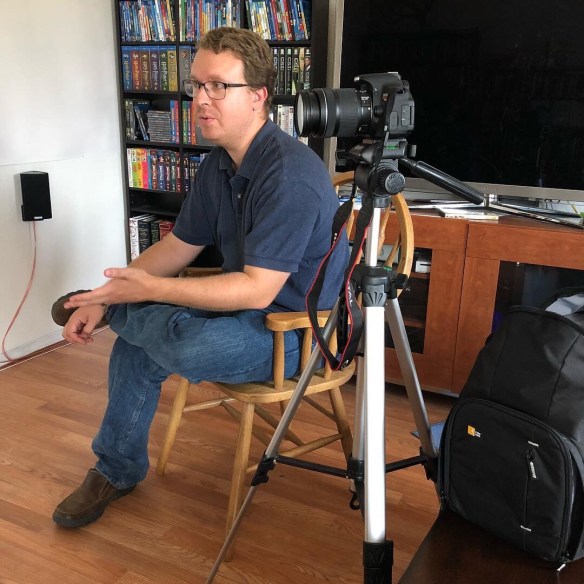
Into the Void writer/director Michael Gates conducts an onscreen audition interview during pre-production of the Web series’ pilot episode. Photo courtesy of Machinations Entertainment

The story of the series, taking place in the year 2641, follows the officers and crewmen of the starship Chimera, a destroyer/escort vessel lead by Lt. Commander Marcus DeVol. DeVol’s family is near ruin, but he aspires to restore his status with his purchased commission running down pirates and blacklisted vessels. However, when he receives a change of orders just before cast-off, DeVol must lead his curious mix of crewmen into certain danger despite them having their own agendas.

At its core, the concept resembles a litter of genres including science fiction, action and character-driven drama. However, creator Michael Gates, who co-wrote the teleplay for the first episode with brother Patrick Gates in Spring 2016, aspires to tweak the concept to give it a fresh take on the genres it wades.

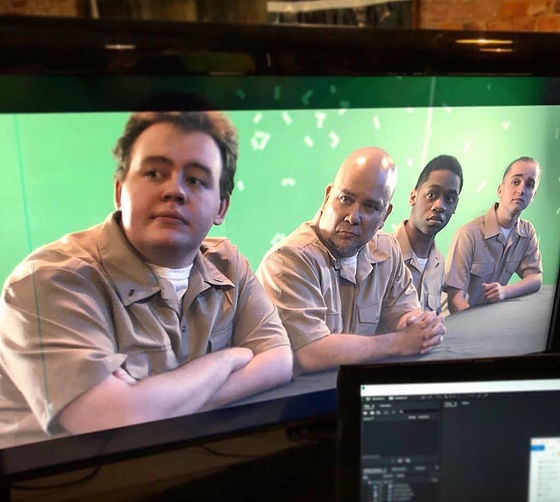
Seen from a monitor during the first week of production, from left, Dylan Tompkins, Brian Nakanishi, Anthony Kelly and Andrew VanDeGrift as supporting cast of Into the Void. Photo courtesy of Machinations Entertainment

Into the Void in its very development steers away from Sci-Fi stereotypes, especially when it comes to a military-style vessel in space. By avoiding stereotypes, the shows creators have added a higher element of danger to its characters. For one, the starship Chimera does not voyage in a universe where shields are a standard option of defense. The starship is just as vulnerable to damage or even destruction from the space equivalent of a torpedo as any submarine in the waters of WWII.

Although space “hop” technology for the Chimera is possible, the use of this notorious tool for Sci-Fi projects of its kind is extremely limited out in the Void. Rather, the show’s concept for the voyage is the same as the 1600s era of British frigates where the ship sets sail for months even years at a time.

Attempting to redefine the action genre, Gates said the concept relies most on suspense and tension rather than traditional action sequences.

“We wanted to strip out as much of the usual magic tech and gimmicks as possible to focus on characters,” Gates said. “As we did that, the aesthetic of the show began to naturally resemble that of a traditional submarine film. Cramped quarters without windows or giant view screens that give you a perfect look at the approaching enemy.”

Although the story involves military-style action sequences, Gates and company has set out to drive the series with its characters’ outer and inner motivations, emphasizing more on characters’ faces rather than gunfire, he said.

The pilot episode of Into the Void itself is independently financed from the husband and wife production team with finishing funds acquired from a crowdfunding campaign completed shortly after casting. Pre-production has taken years as Gates has compiled digital storyboards, sets, lighting and screen tests, creating a pipeline for the production ready for post once principal photography is finished.

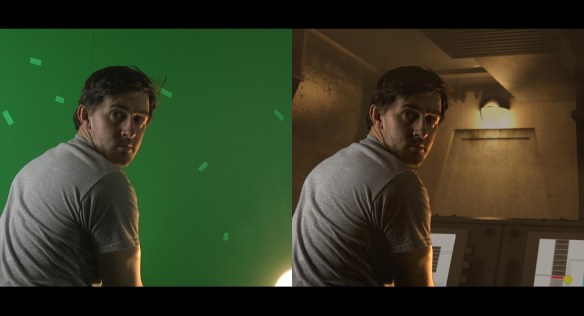
Andrew Comden looks back in a side by side comparison for a shot involving green screen technology during screen tests for Into the Void. Photo courtesy of Machinations Entertainment

Although Gates and company has trudged through many facets of production to their present point, Gates said he has enjoyed watching his cast create their performances over the past few weeks. He considers casting a leap of faith for both actor and filmmaker.

“Watching the cast build their characters and bring them to life is perhaps the most rewarding part of the whole experience,” he said.

Of course no production is without obstacles. For Into the Void’s pilot episode, Gates said scheduling was the most daunting task. A producer has to budget production days wisely in order to make sure there is enough time to get the scene right, he said.

“My original shooting schedule was definitely too ambitious,” Gates said. “Fortunately, we’ve managed to build a cast and crew who are committed to finishing the pilot and making it the best it can possibly be.”

Principal photography for the pilot episode resumes near the middle of June and is anticipated to wrap late June.

For more information on the Into the Void series and updates, visit the production’s Web site at www.ventureintothevoid.com.