Keeping on track: My ball and chain method

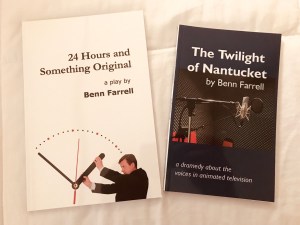
Once in college I was writing a stageplay, my first full-length stageplay actually, titled “24 Hours and Something Original.” It was a Spring semester and I was writing the play for myself mostly. However, I was neck deep involved in the theatre company at the college, volunteering as a board member of its governing body.

So of course, I felt if the play was good enough, it may be an option to produce with the company that following summer, since a summer show had not been chosen, nor were they on a regular basis. I wasn’t writing the play very fast. I was definitely taking my time.

However, that had to change after I was having a conversation with the theatre office’s administrative assistant, who was looking for a summer production to use in order to acquire stage management class credit. I mentioned the play I was writing and she asked if she could read what I had so far. Usually I don’t agree to such blasphemy but I decided to let her read the first act, which was finished. I hadn’t started the second act because I honestly didn’t know what direction I wanted to take the story. Back then I didn’t have the development process I do now.

So she read the first act and thought it was worth pitching the idea as the summer production for the theatre group. She put the first half in front of the chair of the department who was in charge of all final green lights. He read it and said he’d want to let us produce it depending on the second act. But I had no second act. The gal who was routing for it said she could stall him a week if I could get her the second half by then. We never told the producer the script was unfinished.

So I had a week to turn out a decent second act, which I figured revisions could be worked out during production rehearsals. That week I didn’t do anything else outside of classes except work on that play. I eventually finished on deadline, which has always been my strength, and the complete play was green-lit for production that summer. This was in 2000.

During that crazy week where my fingers bled typing on my outdated laptop which was given to me as a gift the year before, a fellow community thespian, who also wrote for stage as a hobby, saw me in the halls outside the theater and asked what I was working on. I told him I had a week to finish the script I was on to get it produced. He asked me how I was keeping myself focus to be able to turn out a full act in only seven days.

This brings me to the point of this blog. Focus is sometimes a struggle for writers especially when life gets in the way. My life back then wasn’t much except college and production. However, I still needed to stay focused given my deadline. So I had a method of keeping focused and making sure I continued to spend every free moment on the script and it’s that method I continue to use to this day.

I call my method of focus the Ball and Chain Method, a phrase I used for the first time during that hallway conversation. The Ball and Chain Method is basically using a backpack or a bag to keep on my person at all times with all my notes, drafts, laptop, pens, etc. I feel the weight of that bag on me while I’m going about my day so I am constantly reminded I have work to do…and sits a monkey on my back until it’s finished and I can actually put the backpack down.

Now with the age of smart phones comes new adjustments to the Ball and Chain Method. With calendar and reminder apps, there’s new ways to create yourself the constant annoyances which tell you it’s time to sit down and get work done. Now you can set yourself an actual writing schedule and have your phone, which you would obviously have with you at all times anyways, tell you when it’s time to jump.

There’s also a third avenue to the Ball and Chain Method. If you were a fan of the TV comedy “Friends,” you may remember when Ross was on sabbatical from work and Joey had no new projects so Ross encourages Joey to write his own screenplay in which to star. And Ross would be his wing man to keep him on track, his project while being unemployed. Now that is actually a no shit method. Designating someone to read notes and scenes as they are coming off the printer is a great way to make sure you are producing in a timely fashion.

It would also be beneficial, having been there with my playwrighting classes in college, to have a handful of writers including yourself meeting each week at the same time to pass around what work has been finished from the week prior. That weekly meeting, knowing your cohorts are going to expect you to show with something new each time, gives a negative encouragement to keep producing but at least it’s encouraging and it works. At least it did for me.

The Ball and Chain Method doesn’t work for some. It does for me and has since “24 Hours…” was completed in that week and produced that summer thankfully. But sometimes distraction gets the better of people, I mean OH LOOK A NEW EPISODE OF BIG BANG THEORY…

#ballandchainmethod #focus #stayingontrack #bennfarrellwriter
Double your productivity: Write stageplays which already translate to movies

After I had written my first stageplay, a one-act titled “Snowfight in Providence,” I felt bad I spent that time away from writing more scripts for screen. So when it came time for me to write my idea for a full-length stageplay I had a realization.

Broadway for years before that time and still today always tends to produce shows based on movies, even some of its big budget musicals; Catch Me If You Can, Ground Hog Day, etc. so that got me thinking.

What if I do the opposite? If I were to write stories for the stage which would also translate to a film production, I would double the number of properties I build up over time. So with my first stageplay “24Hours and Something Original” I did exactly that. And that’s what I’ve aimed for with every stageplay I’ve written since.

Every story I’ve conceived since 2000 has either been developed in a way it can be made a screenplay or teleplay with very little rewriting.

I would say the only titles I’ve written which may not translate well is “The Twilight of Nantucket” simply because most of it takes place during Studio record sessions and that limited scope wouldn’t translate well to film. I think it would be a little boring from a visual standpoint. And the other work would be “Dadly Intentions,” my first musical and maybe that’s because I don’t see musicals translating to film to begin with…at least not without some sort of grandiose facade like “Into the Woods” or “The Greatest Showman.” But that’s just me. Everything else I’ve done for stage I feel would also make a good movie, or at least one I would want to see.

In fact, I was talking with my wife recently and we felt after we establish a few goals for this year, one of my plays may be getting turned into a digital motion picture. But I’m not making that official announcement just yet.

So how do I write a stageplay with the intention of is translating to film? There’s no absolute answer for that but here’s a couple things I make sure to do style wise which helps.

1. Any monologues I write for a character can usually be told almost completely with visuals without the character having to say a word.

2. Most of my conceptual set designs are locations which could be obtained by a location scout or relatively easily built in a studio. I don’t make them too lavish for that purpose. Also I don’t want to turn off a potential theatre producer by having huge set requirements.

3. I make sure I add scenes which didn’t happen on the set but referred to outside the material. Like a character saying “The other day I ran into Laurie.” For the screenplay, I’d actually write said scene instead of describing it in dialogue.

4. I don’t let EVERY scene be anchored to the set. Some scenes are casual “get to know ya” type scenes which are developing character. Those scene which do not require the set specifically could be taken out and placed in someplace casual like a coffee shop or race track or anywhere really. Any place which could add scope to a film version.

5. Lastly, I watch the timing of my beats. Beats are bits of the plot or character development which drive the story or development forward. Most movies have a shorter time span between these beats, which usually means a movie version would run faster than the produced stageplay. But when I write a play, it has become my style to try and time my beats the same way a movie would. That way, the material is already timed for a film, for the most part, and require as little adaptation as possible to maintain them.

The differences between a treatment, synopsis and your TV Guide recap

I’ve never written a book so I can’t say what promotional tools you should have to help interest literary agents and/or publishers. However, what I have long found is needed for a playwright or screenwriter to have in his or her pocket after completing a final draft.

The thing is, when I first started sending out feelers to production companies for possible interest, the hardest part was knowing what each individual company would accept. Some will accept digital submissions of my manuscripts. Some would accept only printed manuscripts. Some just wanted my resume and a web site address.

Soon, I started getting asked for certain promotional items about my works which I didn’t quite understand. I started to hear words like TV Guide line, or recap, Treatment and Synopsis. Obviously I knew was a synopsis was but treatment and guide line I had no clue. And again, some companies wanted a treatment, some just a synopsis and my first two scenes, some just wanted a guide line and for me to wait until they request the manuscript. Nothing was uniform but some things were consistent. Part of those consistencies were the need for me to write a treatment, a synopsis and a guide line for each of my works if I intended to get them produced.

So in case you don’t know either, as I did once upon a time, let me break down the differences between these three promotional tools.

1. Treatment – This is basically a 20-40 page telling of your story with very little dialogue. It’s most commonly requested when you’re pitching a screenplay and it’s probably smart to copyright the treatment as well as our script. A lot of producers I hit up, if I wasn’t turned down immediately, had requested to see a treatment prior to me sending the manuscript. I didn’t run into this very much when promoting a screenplay. However, the next two for stageplays is a must have.

2. Synopsis – This is a one page telling of the basic plot points of your story and what it’s attempting to say or convey. It should let the reader know it’s themes and messages and mention the important of every line speaking character. In the instance of a screenplay, make sure you mention your principal and reflective characters. No need to mention walk on roles specifically unless they bring a huge plot point with them.

3. TV Guide Line, recap or log line – Now since I don’t know anyone who may still remember TV Guide, let me use DirecTV or Dish Network as an example. So you are combing through your satellite TV provider’s guide on your TV screen. You see a movie listed on TMC titled “Roman J Israel, Esq.” You’ve never heard of this movie so you hit the “Info” button on your remote. The screen then provides you a 2-3 sentence guide line of what the movie is about. That’s what people meant when they wanted my TV Guide Line.

So think of these promotional tools as sharing your story in 2-3 sentences (guide line), one page (synopsis) and 30 pages (treatment). And that’s the basic difference.

Believe it or not, I’m far better at whittling a description of my scripts down to 2-3 sentences than I am writing a 30 page treatment. The treatment takes up so much time for me trying to decide what all should go into it. However, a guide line is basically what you would tell someone at a cocktail party who asks, “What’s your new script about?” You only have a few seconds or minute of their time, so a quick recap of your work should be something that comes easily to tell them, and put on paper. The guide line is what you will use in your query letter to get a producer to request the next step of your pitch (the treatment or manuscript or sample pages).

So below is an example of my guide line for my stage play “Fat Farm” found on my “Stageplays” page.

Below is an example of my synopsis for the same play, found on its devoted page.

If I were to get a call from a producer who said “Hey I got your query letter,” (with my guide line. “I’d like you to tell me more but I only have a few minutes,” then the synopsis is what I would tell him.

The treatment I would even write unless someone requests it. But that’s just me. A lot of screenwriters use them as an important piece of their pitch so don’t disclose it. I just haven’t the need for it that much. Usually, from the synopsis, the producers I’ve come in contact with either weren’t interested or wanted the entire manuscript.

Usually the rejections came for silly reasons like I had more characters than what they were looking for, the run time was too long or too short, or the set requirements were too great for their available spaces, etc. What can you do? Some producers or companies are looking for specific material and you may not have a work that is a good fit for them.

On a side note, if you ever do get a response like that with a rejection for one of those reasons, always ask for a referral for a producer or company which may be a good fit for your work. A lot of times, someone who rejects you is willing to help you by letting you drop their name to someone else. And so I don’t forget, theatre producers are far more willing to help than those who solely produce motion picture or television, in my personal experience.

So hopefully, you get an idea of the differences between a treatment, a synopsis and a guide line. All are important and all should be written up and ready to present with as much care as the work itself, especially with you want to end up seeing your work on the stage or screen.

#treatment #synopsis #guideline #recap #logline #promotionaltools #itneverends #bennfarrellwriter

Your characters’ journey may not end with Fade Out

There was a term I learned in filmmaking class called “Intertextualization.” Basically, it’s material from one work which crosses over to another.

The obvious example present day is the Marvel and DC Universe movies where superheroes and villains are used in several titles. A little more subtly is “Forgetting Sarah Marshall” and “Get Him to the Greek,” both of which share one supporting character Aldous Snow, played by Russell Brand. John Wayne as Rooster Cogburn and Paul Newman in “The Hustler” and “The Color of Money” would be another.

The point to me bringing this up is crossing over characters. Sometimes you’ve written something in your past and presently you may be stuck for a new idea. Sometimes that new idea can come to you by digging out a previous character and extending their own story.

When I was mostly writing screenplays, I wrote one work called “Whitebred.” The main character’s boyfriend was a chap named Denny, and I took Denny’s story into his own movie which I called “Wonderbred.” Since his group of friends was the same as those in Whitebred, all my character development was built in and away I went with a new work.

When I started the switch to stageplays, I wrote a script called “24 Hours and Something Original.” A couple years later, I came up with a play solely because I wanted to write a story which took place in a recording studio. I was having trouble devising a plot however.

So I once again dig through things I’d already written looking for a couple characters to spark a story for my recording studio setting. I eventually figured Dennis, my young creator of the animated TV show Nantucket from my “24 Hours…” script, who continues his story into what I titled “The Twilight of Nantucket,” which centered around the voiceless talent of the TV show and Dennis makes his new appearance at the end where he gets to stick it to my villain executive character, also from “24 Hours…”

Now to be honest, I’m not exactly certain “The Twilight of Nantucket” is as good a play as “24 Hours…”. However, I am confident that the later show does stand on its own. Meaning, a reader or audience member wouldn’t need to have seen “24 Hours…” to understand what’s going on in “The Twilight of Nantucket.” And at least those two characters from the first story helped fuel my idea for the second story, even though they are only a part of the climax.

So if you ever get stuck when developing a new idea, try dusting off characters you’ve already developed for other works and see where they may fit. Some times new characters need a little mentoring and can spark plot points to extended the life of people you’ve already invented.

Life shouldn’t get in the way of writing; it should be the inspiration

It may be hard for some authors to continue developing and writing new work, especially when it’s not yet a full time job.

The phrase that always coins the persistent stop and go from my own projects is “Life gets in the way.” That is but the simple truth. Life for me means marriage, a good paying business which takes up much of my time seven months out of the year and of course my three children. There are always honey-do’s, daddy-won’t-you-please’s and sales calls to be completed with the utmost importance when they come up. So if I am neck deep in the middle of a scene or typing up a draft of my latest work, it doesn’t matter. Life and my responsibility in it takes precedence until I can come back to my creative time.

However, what I’ve managed to learn is my life may get in the way, but it only now fuels the material from which I draw for characters, dialogue, plot points, etc.

My most recent example is my project Dadly Intentions, which I first started developing and inking June of last year. I found myself very inspired at that time to write my first musical, and of course I needed a story idea. This also came shortly after my father told me he had cancer and was terminal with three to six months to live (he made it to eight). At the same time, my boy/girl twins just exited the terrible three’s in fine fashion and my six year old just completed Kindergarten and going on her sophomore year of college given how sharp she was. And lastly, I am always trying to not let life get in the way of being a good husband and showing my appreciation for my wife.

What’s more, I was in the upslope of my prime season of my “paying gig” so finding time to pen a new play, a musical no less, didn’t seem possible. However, I managed to have my first draft finished with all lyrics within four months including my usual weeks of development and planning.

The reason was my story idea ended up being about a struggling screenwriter/producer who becomes a new father to boy/girl twins about the same time he learns his father is dying. So my musical is basically about a man who goes on a journey to learn to be a good husband, father and honorable son while not giving up on his own dreams. Sounds familiar, right? The stars aligned between my creative inspiration and my life inspiration and because of that I had so much material with which to express myself.

And to be honest, writing that play serves as a sort of therapeutic outlet during such an intense time. In turn, I whole heartedly feel Dadly Intentions is my most personal creative work since my stage play Mourning News.

I’ve read several times over Woody Allen tends to take bits of his personal life and uses them as the muse of his writing. Not that I would be so presumptive to compare my quality of writing to that of Woody Allen, but I will say the older I get and the more “life” I end up having, the more I can start to relate to how Allen uses life’s natural plot points as his creative ones. It really does help far more creative work which feels human and relatable if you can take life getting in way and using it to fuel your writing, at least for me it does.

By the way, if Allen’s works are always inspired by his personal life, than given certain consistencies in his material, his life must involve psychotherapists, hookers and jazz music almost every day. Just an observation.

Anyways, next time your trying to crank out a written work and life suddenly gives you a curve ball, think of your situation and how it can help your writing instead of prevent you from doing it.